
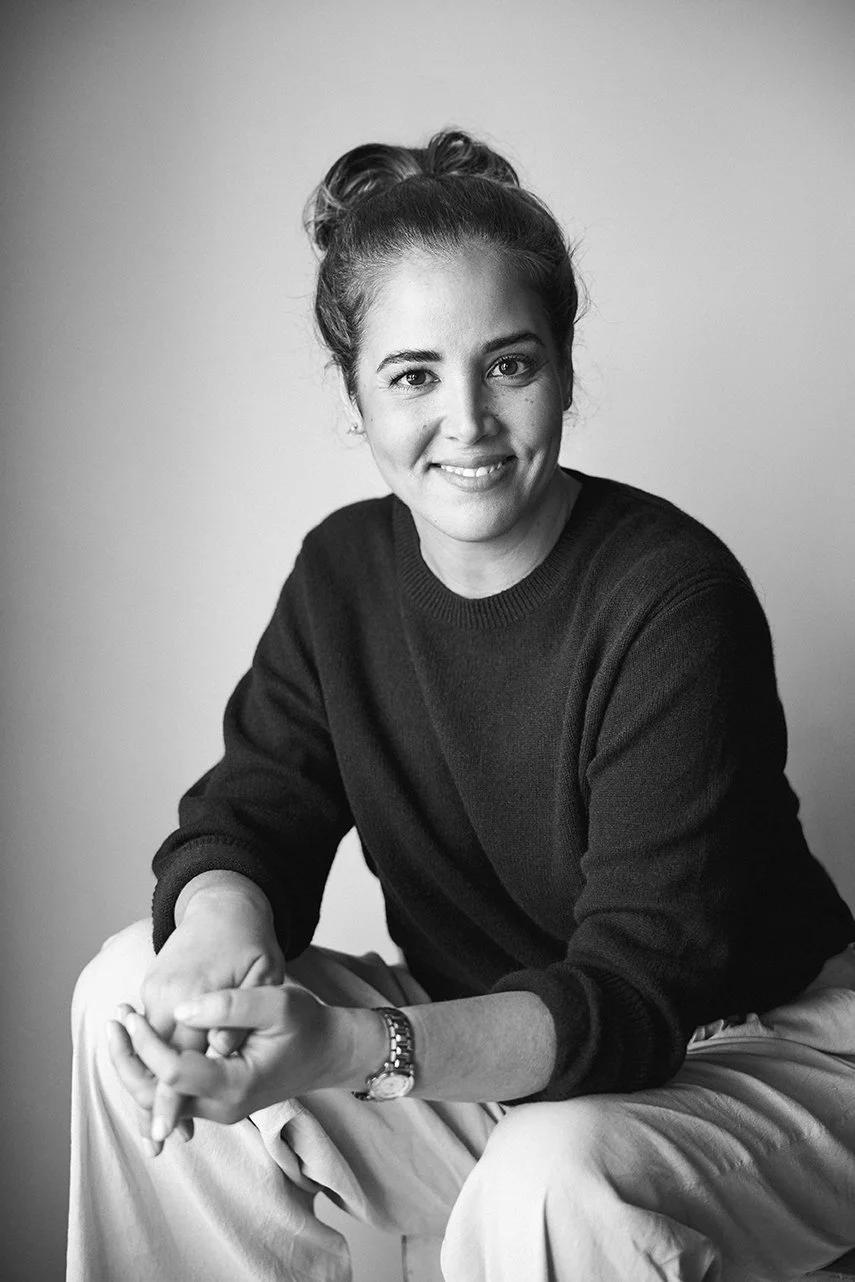
Mariam Mellouli
Master of Psychology (2008) · Licensed Psychologist (2010) · MSc, King's College London
I am a licensed psychologist with 18 years of experience at the intersection of people and organizations.
Today, I run my own practice focused on stress management, leadership, and career development.
Throughout my entire career as a psychologist and in my further studies, I have been deeply interested in well-being and performance—and how the two support each other and create sustainable work communities.
I work with individuals, leaders, and teams, and have extensive experience with both Danish and international companies, as well as private and public organizations.
Starting August 1, I will be moving to Morocco. Therefore, going forward, I will be offering my individual 1-on-1 sessions exclusively online. At the same time, I’ll be working on leadership and other industrial-organizational psychology projects in Morocco, as well as dedicating time to further developing a volunteer playroom project at a children’s hospital, which I run in collaboration with another project manager.
I am a member of the Danish Psychological Association.
Why industrial and organizational psychology, of all fields?
My career as a psychologist began at PPR in 2008. I thought this was where I could make the biggest difference. I did make a difference, but not in the way I had imagined. It didn’t take me long to realize that the children’s well-being depended on something far greater than just the adults closest to them. It was shaped by the collaboration among colleagues, the clarity of leadership, the workplace culture, and the external demands placed on the organization.
Nevertheless, action plans were developed centrally and rolled out from the top down. Everyone pointed to the next person in the chain, and when the changes failed to materialize, the explanation was almost always: “They’re not doing what they’re supposed to.” There was a great deal of focus on which goals needed to be achieved and on developing action plans and procedures, but far too little on how to ensure that the employees responsible for driving the change also had the desire and ability to carry it out. Rarely was the question asked: Do employees even have what it takes to accomplish the task? Do we have the organizational culture and leadership skills required? And do employees believe that putting in the effort will make a difference?
To succeed in the core task, I initiated management coaching focused on handling resistance and provided supervision focused on the staff’s sense of powerlessness and frustration before turning the attention to the challenge and the task at hand. It was here that my curiosity about organizational psychology was truly piqued. I saw a great deal of energy and time being spent at the very top of the organization on defining strategies and processes from a distance, but not enough understanding of the specific challenges and assumptions at play on the ground among those who were tasked with implementing the strategy—and turning it from mere words on paper into a lived reality.
Fromfrom PPR to King’s College London
In 2014, I took a leave of absence to pursue a full-time MSc in Strategic HRM and Organizational Analysis at King’s College London. In addition to a year in the big city, the program gave me the language to articulate what I had already sensed at PPR: that performance, engagement, and well-being are inextricably linked—and that leadership is crucial to creating a strong, self-managing culture. Psychological safety is not a vague concept. It is an absolute prerequisite for employees to even dare, be willing, and be able to contribute to the organization’s goals. And for them to feel like valued teammates rather than pawns that are simply being moved around.
Afterward, I worked as a management and HR consultant at Dansk Erhverv and then as a management consultant at Implement Consulting Group. There, I gained firsthand insight into the dynamics that, since 2019 as an organizational psychologist, I have helped employees and managers navigate. My most important lesson from that journey is that the challenges I observed in PPR are not unique. They are a fundamental reality in many modern workplaces—both private and public.
My focus at work is on performance, not just well-being
Through my many one-on-one sessions with hundreds of leaders and specialists, I’ve noticed a clear pattern: The individuals who perform well, deliver results, and take on enormous responsibility—they burn out or lose confidence in themselves when the framework and culture around them don’t support them.
Although well-being is a worthy goal in itself, my work is about much more than that. It’s about equipping leaders and employees to thrive in their roles—both professionally and personally—with a clear understanding of their responsibilities and goals.
People who take on a great deal of responsibility must also have the appropriate level of influence. Otherwise, they’ll burn out, and no one benefits when an individual sacrifices themselves. My passion is to create a balance between responsibility and influence—for the benefit of both the individual and the entire organization.
My story